School Miles: The Next Big Thing In Rural India’s Sustainable Menstruation Journey
How School Miles is Redefining Menstrual Health and Girls’ Education
Menstruation remains one of the least discussed yet most significant barriers to girls’ education. Lack of menstrual health education, limited access to safe menstrual products, inadequate sanitation facilities, fear of leakage, menstrual pain, and deeply rooted social taboos often force girls to miss school. Over time, these missed days translate into poor academic performance, lower confidence, and in many cases, school dropout. At Unipads Foundation, we believe that no girl’s education should be interrupted simply because she menstruates.
That belief gave birth to School Miles—an innovative school-based menstrual health initiative that transforms every step a girl takes towards school into a step towards a brighter future.
Beyond Menstrual Pads
Most menstrual health programmes focus on distributing sanitary pads or conducting awareness sessions. While these are important, they rarely address the full spectrum of challenges girls face.
School Miles adopts a holistic approach.
The programme integrates menstrual health education, access to sustainable menstrual products, improved WASH (Water, Sanitation and Hygiene) infrastructure, pain management, teacher capacity building, parental engagement, career guidance, and attendance-linked incentives into one comprehensive model.
Instead of treating menstruation as a health issue alone, School Miles recognises that it is equally an education, gender equality, environmental, and social justice issue.
Walking Towards Opportunity
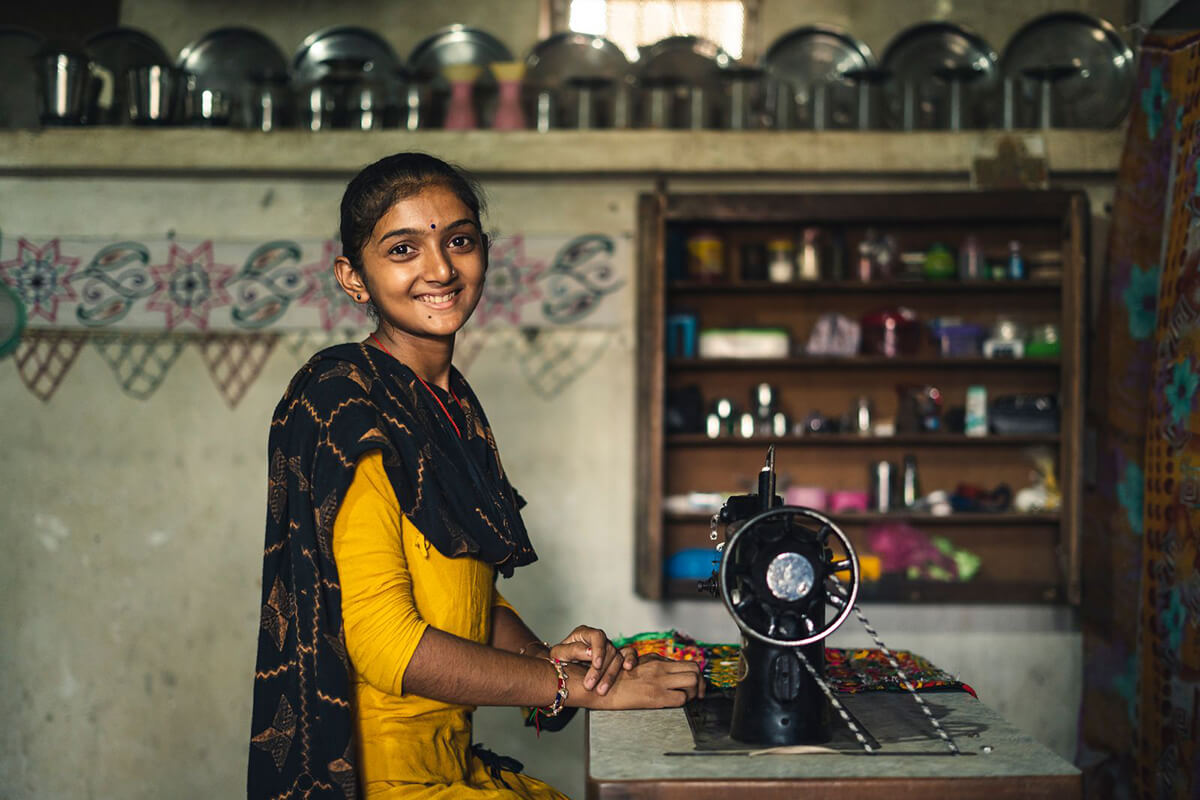
The name School Miles carries a deeper meaning. Thousands of girls in rural India walk several kilometres every day to attend school. Yet during menstruation, that journey becomes physically and emotionally difficult.
School Miles transforms these journeys into opportunities.
Every day a girl attends school, the distance she walks is converted into “School Miles.” Much like airline reward points, these miles accumulate throughout the academic year and can be redeemed for educational materials, hygiene products, scholarships, career exposure opportunities, books, uniforms, and other learning experiences.
Attendance is no longer just a statistic. It becomes an investment in a girl’s future.
Building Period-Friendly Schools
School Miles recognises that changing one girl’s life requires changing the ecosystem around her.
The programme therefore works with the entire school community.
Girls receive age-appropriate menstrual health education that covers puberty, menstrual biology, hygiene practices, sustainable products, mental wellbeing, and myth-busting.
Boys participate in dedicated sessions that help them understand menstruation, challenge harmful stereotypes, and become supportive peers rather than silent bystanders.
Teachers are trained as Menstrual Health Champions who continue promoting healthy practices long after the project ends.
Parents are engaged to create supportive home environments where menstruation is discussed with dignity instead of shame.
Schools establish menstrual health clubs that encourage student leadership and sustain behavioural change.
Sustainable for Girls and the Planet
Another unique feature of School Miles is its commitment to environmental sustainability.
Each participant receives a comprehensive hygiene kit that includes reusable cloth pads, cotton underwear, soap, a hot water bag for menstrual pain relief, educational materials, and a school bag.
Reusable cloth pads not only reduce recurring menstrual expenses for families but also significantly reduce plastic waste generated by disposable sanitary napkins.
By choosing reusable products, girls are protecting both their health and the environment.
Better Facilities, Better Learning
Even the best menstrual products are ineffective without safe sanitation facilities. School Miles therefore assesses and strengthens school WASH infrastructure, including:
- Functional girls’ toilets
- Privacy and door locks
- Running water
- Handwashing stations
- Disposal systems
- Changing spaces
Creating a period-friendly school means ensuring that every girl has a safe, private, and dignified place to manage menstruation.
Measuring What Matters
School Miles is designed as an evidence-based intervention.
The programme begins with a baseline assessment to understand existing menstrual health knowledge, attendance patterns, access to products, and school facilities.
Throughout implementation, attendance and behavioural indicators are monitored.
An endline assessment measures improvements in knowledge, confidence, menstrual hygiene practices, school attendance, and overall wellbeing.
The findings will contribute to research, strengthen future programming, and support advocacy for integrating menstrual health into mainstream school education.
Every Girl Deserves to Dream
At its heart, School Miles is not just about menstruation.
It is about ensuring that girls stay in school long enough to discover who they can become.
That is why the programme also includes career guidance sessions, university exposure visits, and opportunities to meet inspiring women leaders.
When girls see possibilities beyond their village, they begin to imagine bigger futures for themselves.
Education becomes more than attending school.
It becomes a pathway to agency, independence, and dignity.
Every Mile Counts
A single day of missed school may appear insignificant.
But repeated over months and years, those missed days become missed opportunities.
School Miles is built on a simple belief:
Every mile a girl walks to school is a step towards better health, stronger confidence, higher aspirations, and a brighter future.
Together, schools, parents, communities, CSR partners, and policymakers can ensure that menstruation never becomes a reason for a girl to stop learning.
Because when girls stay in school, everyone moves forward.
Every School Mile is a stride towards a better India.
This blog is based on the School Miles concept note, including its integrated intervention model, objectives, incentive mechanism, WASH improvements, teacher and parent engagement, reusable menstrual hygiene kits, and evidence-generation strategy.